Address
Miami Florida, 3475 Sheridan St, Hollywood, Florida, 33021
Make a Call
(877)-238-0307
Mon - Sat: 09am - 09pm
Address
Miami Florida, 3475 Sheridan St, Hollywood, Florida, 33021
Make a Call
(877)-238-0307
Mon - Sat: 09am - 09pm

Florida property taxes for non residents are one of the most misunderstood costs in the entire South Florida buying process. Buyers often spend weeks comparing listings, reviewing financing options, and estimating HOA dues, but they still underestimate how much taxes can affect annual carrying costs, long-term affordability, and investment returns.
That matters whether you are a Canadian snowbird, a U.S. buyer from another state, a first-time investor, or someone looking for a second home in South Florida. While Florida is known for having no state income tax, that does not mean ownership costs are simple. In markets like Miami, taxes are one of the core expenses that shape your total cost of ownership.
This is especially important for people exploring Miami real estate opportunities, broader South Florida locations, or a full-service buying path through Miami P&B Investments. If you are trying to compare a condo in Brickell with a home in Fort Lauderdale, or deciding between a personal-use property and an investment purchase, the tax line can change the math more than many buyers expect.
The good news is that Florida property taxes for non residents are not impossible to understand. The key is knowing what actually drives the bill, where non-resident owners are different from full-time Florida residents, and how to connect your tax planning with the rest of your purchase strategy.
Florida property taxes for non residents are generally based on the property’s taxable value and the millage rates set by local authorities. That means the number on your tax bill is not simply a flat percentage of your purchase price. It is shaped by assessed value, exemptions, local tax rules, and how the property is classified under your ownership profile.
For non-resident buyers, that distinction matters immediately. Two similar condos in the same building can have noticeably different tax bills. One owner may have held the unit for years and qualified for tax benefits tied to primary residency. Another may use the property as a second home or rental and not receive the same treatment.
This is why buyers should never assume the seller’s current tax bill will automatically become their future tax bill. If you are reviewing condos for sale in Miami, evaluating a second home, or comparing properties through Miami P&B’s real estate services, the tax estimate should be built around your intended use of the property, not the seller’s history.
For many buyers, this is where the conversation about taxes starts to overlap with financing and property type. Someone reading about a U.S. mortgage for Canadians in Florida may initially think only about loan qualification and down payment structure, but Florida property taxes for non residents, are just as important because they shape monthly carrying costs and lender escrows.
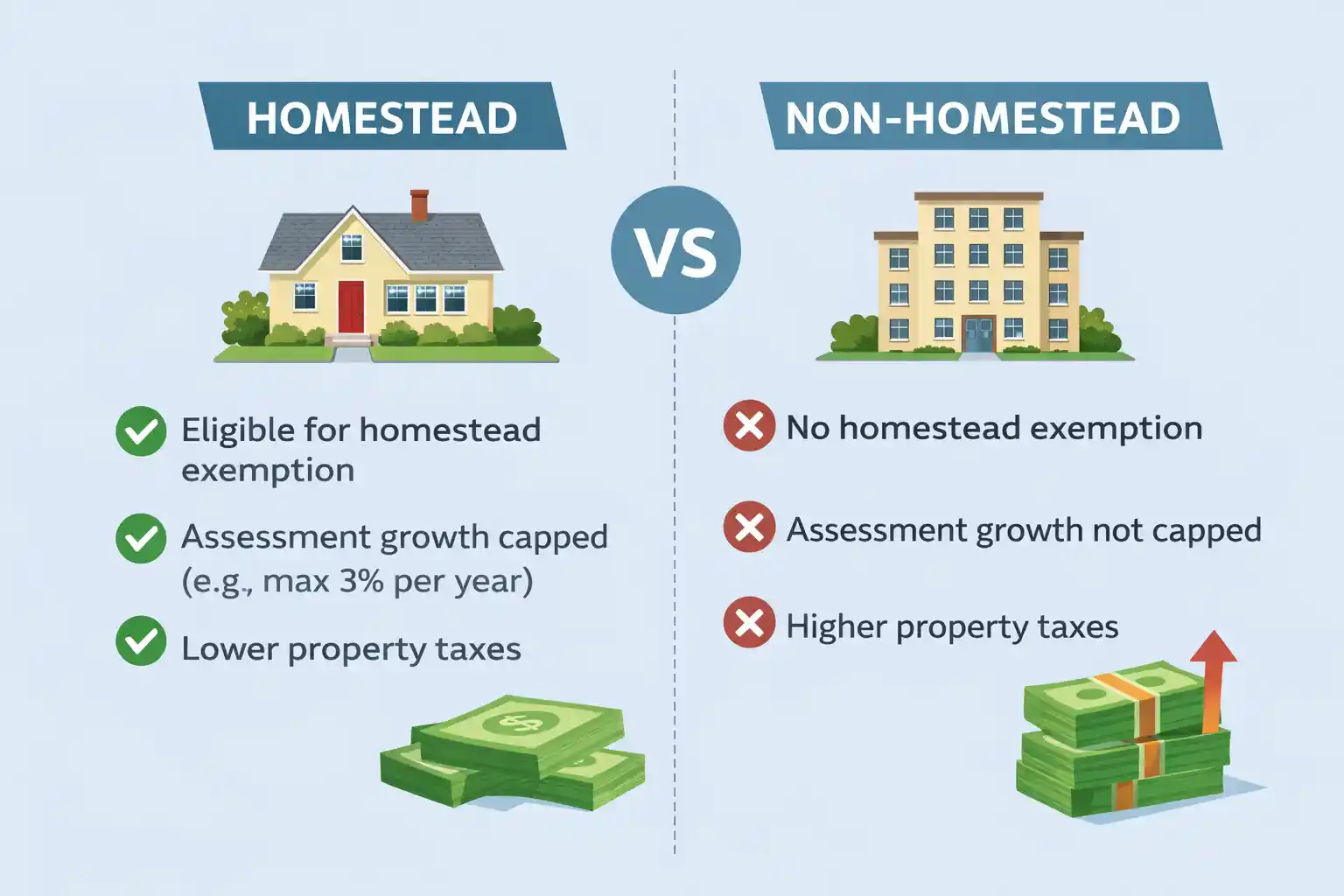
The biggest difference between residents and many non-residents is usually not that they are charged under a separate tax rate. The more important difference is eligibility for exemptions and long-term protections tied to a true Florida primary residence.
A buyer who genuinely lives in Florida full time may qualify for homestead-related benefits. A buyer who lives primarily in Canada, New York, or another state and uses the property seasonally usually will not. That difference can materially change annual taxes over time.
Here is a simple comparison:
| Owner Type | Likely Homestead Eligible | Typical Tax Position |
|---|---|---|
| Full-time Florida primary resident | Often yes | Lower taxable value over time if qualified |
| Out-of-state second-home owner | Usually no | Higher long-term tax exposure |
| Canadian seasonal owner | Usually no | Similar treatment to other non-homestead owners |
| Rental property investor | No | Taxes should be modeled as an investment expense |
This is one reason smart buyers do more than browse listings. They also review related ownership costs like Florida condo special assessments, financing options, and future management needs. A condo with an attractive asking price can still become a weaker deal if taxes, insurance, and building costs are not modeled correctly.
If you are a Canadian buyer comparing properties in Miami and South Florida, it also helps to pair this tax question with broader education on Florida real estate for Canadians and the site’s dedicated page for Canadian investors in Miami and South Florida real estate.
In practice, they often pay more than full-time resident owners, but not because Florida imposes a special “non-resident property tax.” The difference is more often tied to what a non-resident owner does not receive.
A full-time Florida primary resident may qualify for meaningful tax advantages that second-home owners, seasonal residents, and pure investors often do not receive. Over time, that can create a real gap between what two otherwise similar owners pay for very similar properties.
This is why the better question is not, “What are the taxes now?” The better question is, “What are the taxes likely to look like after I buy this property under my ownership profile?”
That is also why buyers should link tax planning with legal and accounting planning early. A purchase should not be analyzed in isolation. It should be reviewed together with real estate legal services and accounting support so the ownership structure, tax expectations, and reporting obligations all work together.
This is one of the most common questions among cross-border buyers, and the answer is not always simple. A Canadian buyer may be eligible only if the property is truly their primary Florida residence and they meet the legal requirements for that status. Most Canadian snowbirds, seasonal owners, and part-time residents should not assume they will qualify.
That does not mean buying in South Florida is a bad idea. It simply means the property should be evaluated honestly. If you build your financial model around owner-occupant tax benefits that you likely will not receive, the numbers can look better on paper than they do in real life.
For that reason, buyers exploring Canadians buying property in Miami should view taxes as part of the full cross-border ownership strategy. That strategy often includes financing, accounting, legal structure, property management, currency considerations, and future exit planning.
This also matters for buyers looking at newer inventory. If you are considering Miami pre construction condos for Canadian investors, it is tempting to focus on deposit schedules and appreciation potential. But even in pre-construction scenarios, long-term property taxes still deserve a place in the evaluation process.
Florida’s tax reputation can be misleading. While the lack of state income tax is appealing, buyers still need to plan for Florida property taxes for non residents, insurance, HOA dues, maintenance, and reserves. That is especially true for condo buyers in Miami and South Florida.
This is one of the most expensive mistakes. A seller’s current bill may reflect exemptions or long-term ownership circumstances that will not apply to you after closing. If your ownership profile is different, your future taxes may be meaningfully higher.
Many buyers fall in love with the idea of part-time living in Florida and then unconsciously model the property like a full-time primary residence. That can distort the tax estimate and create a misleading sense of affordability.
Taxes are not just a year-one issue. Long-term owners need to understand how taxes may evolve over time, especially when comparing a personal-use property, rental, or hold-for-appreciation strategy.
Some annual charges are not based directly on property value. Buyers who focus only on the headline number can overlook other recurring costs on the bill.
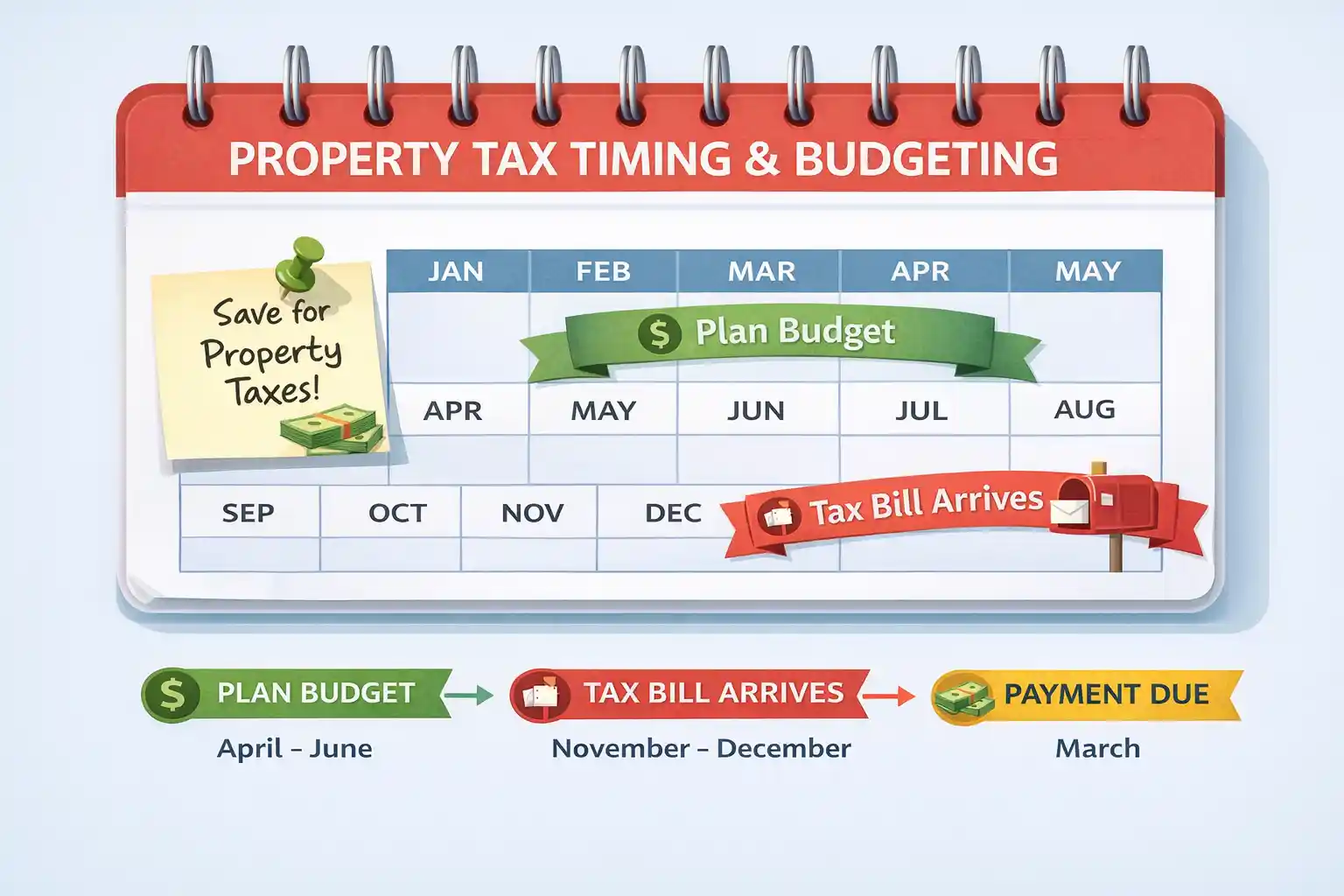
Florida property taxes for non residents are not just a number. They are also a calendar event. If you are paying cash and not escrowing through a lender, your budget needs to account for when that payment actually hits.
This mistake is common among international buyers. Smart planning includes both ownership and exit. Someone who reads about Canadian snowbirds selling Florida property will immediately see how cross-border planning does not stop at closing day.
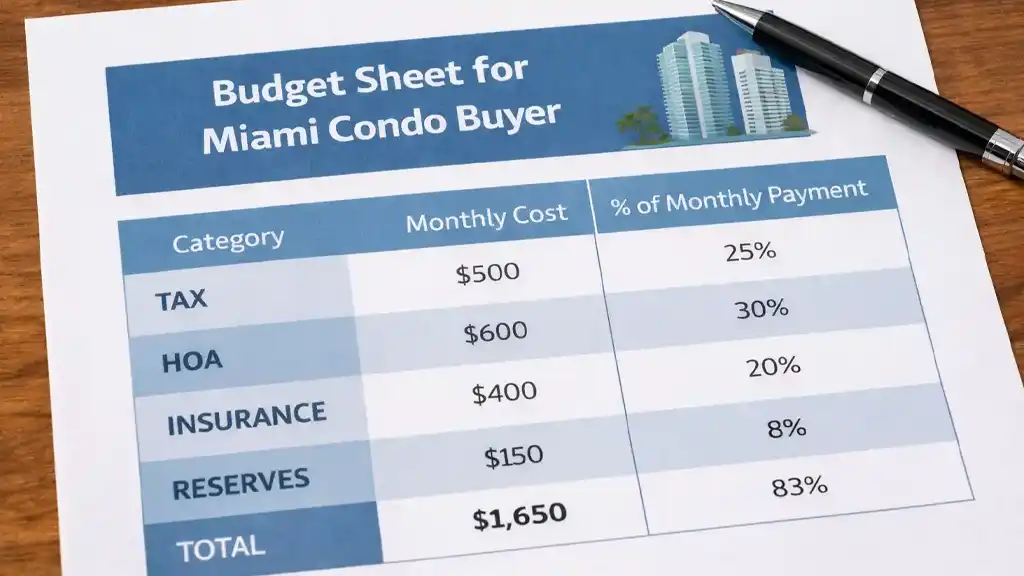
The best way to budget Florida property taxes for non residents is to treat taxes as part of a full cost-of-ownership model rather than as a side note.
Start with these categories:
A lot of buyers focus on the mortgage payment and monthly HOA fee, then treat taxes as a vague annual estimate. That is not enough. In South Florida, taxes are part of the core operating picture, especially when the property is not your primary Florida residence.
If you are comparing two condos, do not just compare asking price and amenities. Compare:
For buyers who want a more complete ownership model, it helps to connect this article with practical resources on the site, including the blog hub, the guide to Canadians buying homes in the U.S., and the article on Florida real estate for Canadians. Each one supports a different part of the same decision: how to buy well, structure the deal correctly, and avoid cost surprises later.
This is also where operational support starts to matter. Buyers who plan to rent the property, manage from abroad, or hold it as an income-producing asset should think beyond taxes and connect budgeting with property management services, construction support, and if needed, access to active listing results while comparing opportunities.
For local full-time owners, taxes are one planning issue among many. For non-resident buyers, they are a strategy issue.
That is because remote ownership magnifies small mistakes. If you are based in Toronto, Montreal, Vancouver, New York, or London and buying in South Florida, every major cost category matters more. Taxes, insurance, maintenance, condo rules, currency conversion, and tenant management all combine to shape whether the purchase still feels smart one year later.
This is particularly relevant for buyers who are drawn to South Florida because of lifestyle and long-term upside. A property may still be a great fit, but only if you understand the real carrying costs. That is why it helps to blend Florida property taxes for non residents with broader market planning through pages like homes for sale in Miami Florida, Miami real estate, and the site’s broader services overview.
It also makes sense to support the article with a few authoritative external resources that readers can use to deepen their research, such as the Miami-Dade Property Appraiser, the Miami-Dade Homestead Exemption information page, the Florida Department of Revenue property tax resources, and the IRS FIRPTA withholding overview. These external references add trust and help readers connect local ownership costs with broader tax and compliance planning.
The right time is before making an offer, not after closing.
That does not mean you need a perfect future tax figure before you buy. It means you should understand the likely range and model the property according to how you actually plan to use it. Waiting until after closing to understand Florida property taxes for non residents is usually too late.
This is especially important for:
If you are still narrowing your target market, it can also help to review Fort Lauderdale real estate opportunities or explore the site’s broader South Florida locations to compare ownership goals by area, property type, and use case.
Understanding Florida property taxes for non residents is only one part of making a strong real estate decision. Buyers also need to think about location, financing, legal structure, accounting, renovation risk, rental operations, and long-term exit strategy. That is where Miami P&B Investments becomes especially useful.
For buyers coming from Canada or from outside Florida, the challenge is usually not just finding a property. The real challenge is understanding how that property performs in the real world after taxes, fees, maintenance, and ownership responsibilities are added in.
Miami P&B Investments helps connect those dots through a full ecosystem of services. Depending on your goals, that may include:
If you are buying for personal use, investment income, or long-term relocation, the smartest move is not just to learn about taxes in theory. It is to evaluate the full ownership picture with the right support system in place.
That is exactly where Miami P&B Investments can help. The educational side starts with the blog. The strategy side continues through the firm’s Canadian investor resources, service pages, active property search tools, and direct consultation options. If you want to turn general information into a deal-specific plan, Miami P&B Investments gives you a practical next step.